Overview
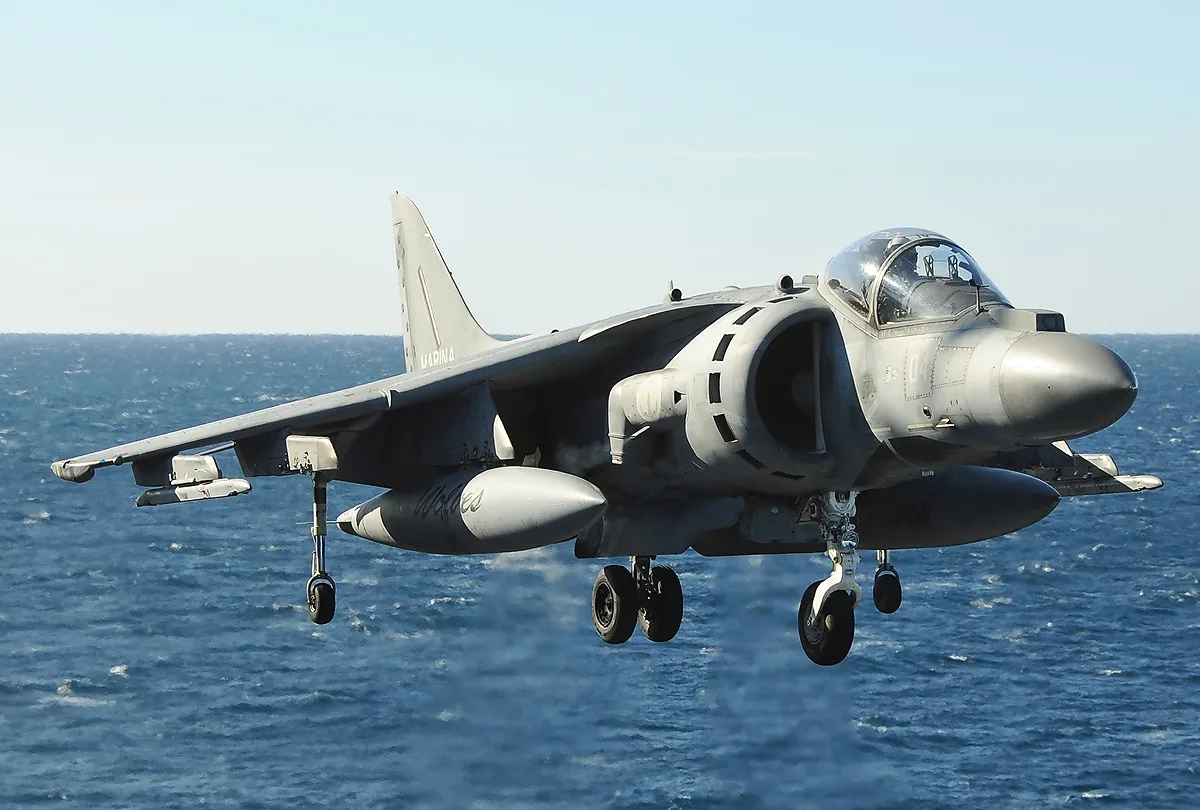
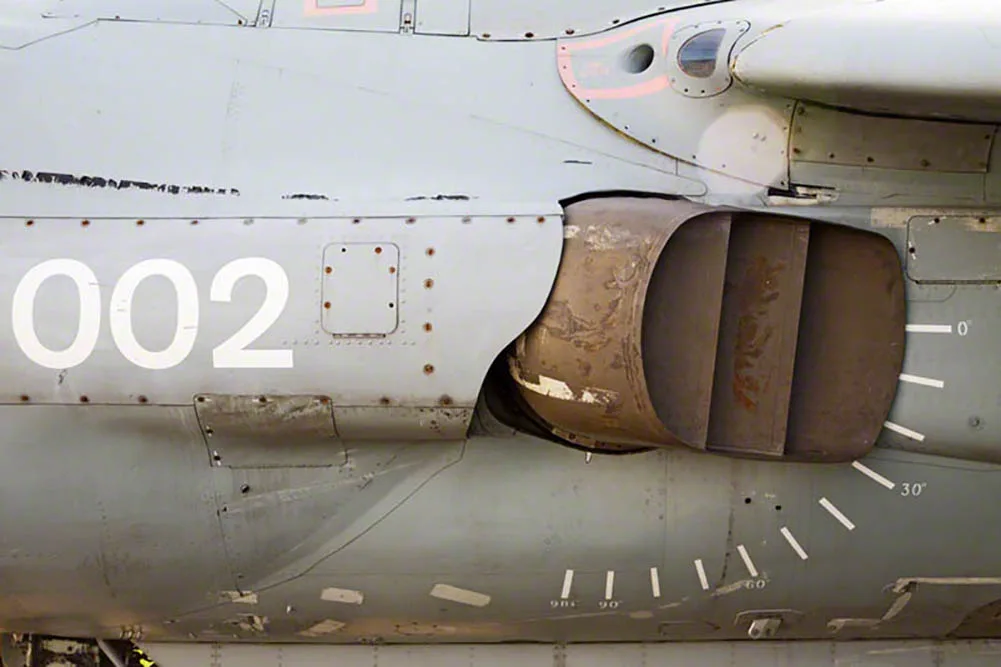
The Hawker Siddeley Harrier was the world's first successful jump jet — a combat aircraft able to take off and land vertically. Its single Pegasus engine has four swivelling nozzles that point down for hovering and backwards for normal flight.
It entered RAF service in 1969 so that aircraft could operate from forest clearings and roads if air bases were destroyed in a European war. The US Marine Corps bought it as the AV-8A, and the related Sea Harrier fought in the 1982 Falklands War. Specifications are for the Harrier GR.3.
Specifications
Dimensions
| Length | 14.27 m |
|---|---|
| Wingspan | 7.70 m |
| Height | 3.63 m |
| Wing area | 18.7 m² |
Weights & fuel
| Empty weight | 5,580 kg |
|---|---|
| Max. take-off weight | 11,430 kg |
Performance
| Max. speed | 1,176 km/h |
|---|---|
| Ferry range | 3,428 km |
| Service ceiling | 15,600 m |
Crew & capacity
| Crew | 1 |
|---|---|
| Hardpoints | 5 |
Powerplant
| Engines | 1 |
|---|---|
| Engine model | Rolls-Royce Pegasus 103 |
| Thrust (each) | 95.6 kN |
Figures are compiled from public sources and may be approximate; they can vary by variant and configuration.
Armament
- 2 × 30 mm ADEN cannon pods
- About 2,400 kg of bombs and rocket pods on 5 hardpoints
Did you know?
Pilots could "VIFF" — swivel the nozzles in forward flight — to slow down or change direction suddenly in a dogfight.
Photos
Photo 1: Antony McCallum (Wyrdlight at English Wikipedia), http://www.wyrdlight.com/. / Wikimedia Commons · CC BY 3.0
Some text and images come from Wikipedia / Wikimedia Commons under CC BY-SA licences.