Overview
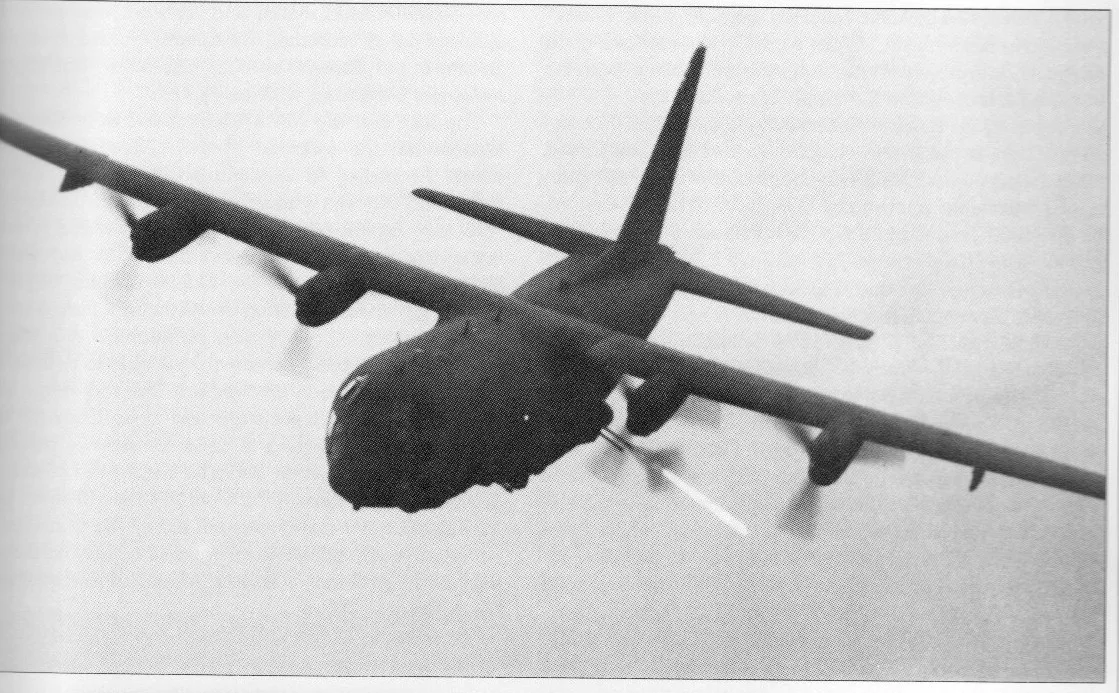
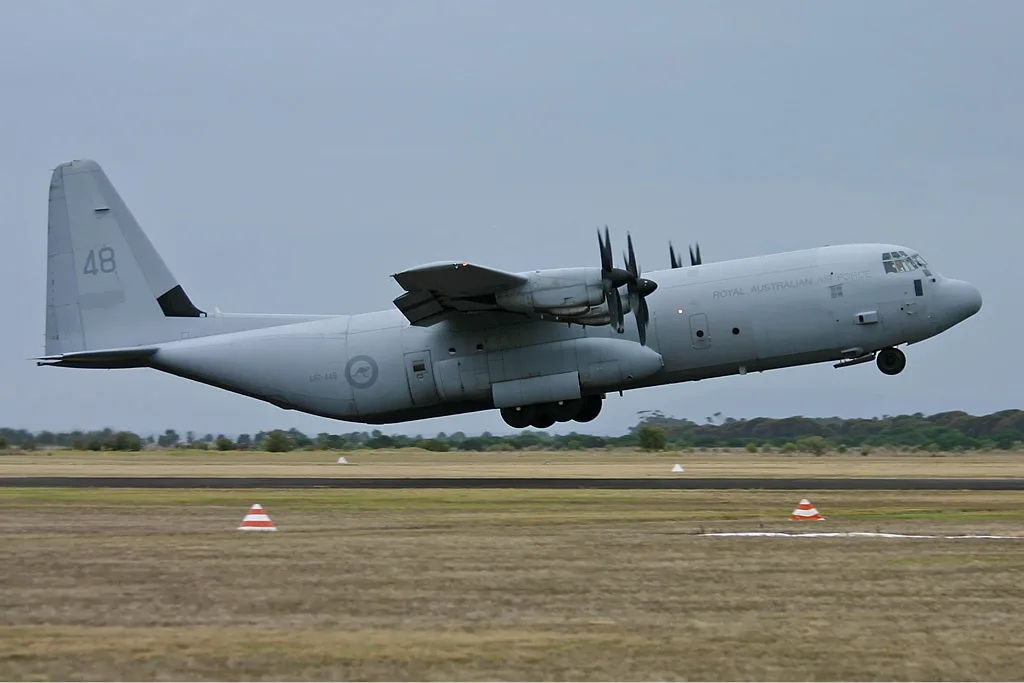
The C-130 Hercules first flew in 1954 and has been in continuous production longer than any other military aircraft. The "classic" versions, such as the C-130H (figures shown), use Allison T56 engines with four-bladed propellers; the modern C-130J has a separate entry.
Operated by more than 60 countries, it can land on short dirt strips and is used for cargo, paratroops, medical evacuation, firefighting and disaster relief. The Sri Lanka Air Force has flown the C-130K, a British-built version from the RAF.
Specifications
Dimensions
| Length | 29.79 m |
|---|---|
| Wingspan | 40.41 m |
| Height | 11.84 m |
| Wing area | 162.1 m² |
Weights & fuel
| Empty weight | 34,382 kg |
|---|---|
| Max. take-off weight | 70,307 kg |
| Max. payload | 19,090 kg |
Performance
| Max. speed | 592 km/h |
|---|---|
| Cruise speed | 540 km/h |
| Range | 3,800 km |
| Service ceiling | 10,060 m |
Crew & capacity
| Crew | 5 |
|---|---|
| Seats (max.) | 92 |
| Cargo capacity | 19,090 kg |
Powerplant
| Engines | 4 |
|---|---|
| Engine model | Allison T56-A-15 |
| Power (each) | 3,424 kW |
Figures are compiled from public sources and may be approximate; they can vary by variant and configuration.
Did you know?
In 1963 a US Navy Hercules landed on and took off from the aircraft carrier USS Forrestal.
Photos
Photo 1: Shahram Sharifi / Wikimedia Commons · CC BY-SA 4.0
Some text and images come from Wikipedia / Wikimedia Commons under CC BY-SA licences.