Overview
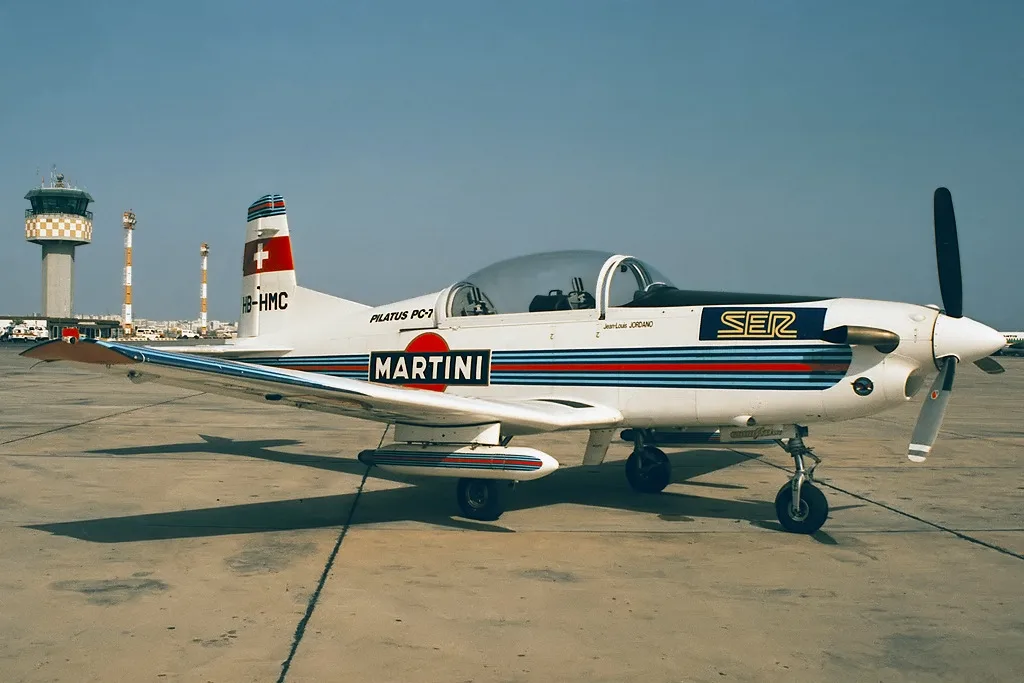
The tandem-seat PC-7 gives student pilots their first taste of military flying. It is economical, aerobatic and forgiving, and was succeeded by the PC-7 Mk II, PC-9 and PC-21.
Specifications
Dimensions
| Length | 10.18 m |
|---|---|
| Wingspan | 10.40 m |
| Height | 3.21 m |
| Wing area | 16.6 m² |
Weights & fuel
| Empty weight | 1,330 kg |
|---|---|
| Max. take-off weight | 2,700 kg |
Performance
| Max. speed | 412 km/h |
|---|---|
| Range | 1,200 km |
| Service ceiling | 10,000 m |
| Rate of climb | 10.9 m/s |
Crew & capacity
| Crew | 2 |
|---|
Powerplant
| Engines | 1 |
|---|---|
| Engine model | Pratt & Whitney Canada PT6A-25A |
| Power (each) | 410 kW |
Figures are compiled from public sources and may be approximate; they can vary by variant and configuration.
Photos
Photo 1: Pedro Aragão / Wikimedia Commons · CC BY-SA 3.0
Some text and images come from Wikipedia / Wikimedia Commons under CC BY-SA licences.