Overview
The H-6 is a Chinese licence-built version of the Soviet Tupolev Tu-16 jet bomber of the 1950s. China has kept improving it for more than 60 years, and it remains the backbone of the PLA's bomber force.
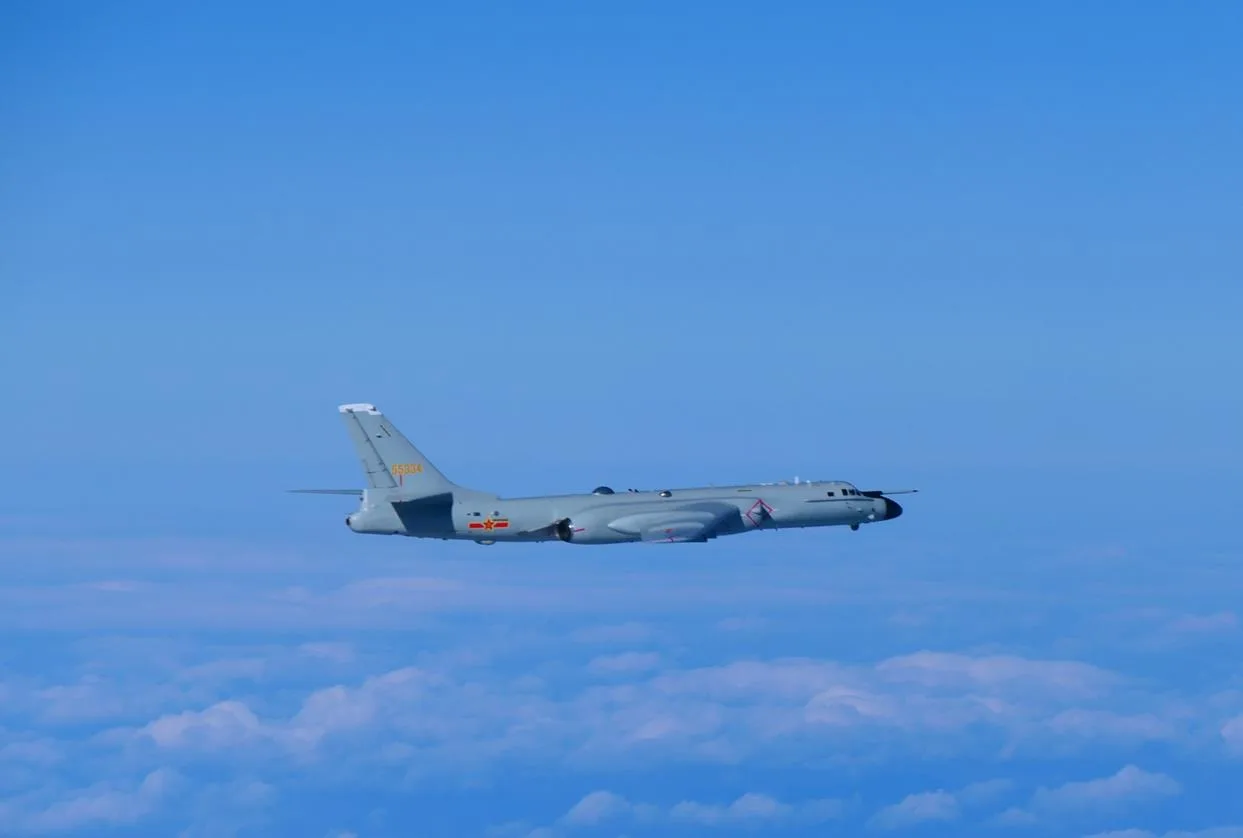
The modern H-6K (figures shown) has new turbofan engines, a glass cockpit and six wing pylons for long-range cruise missiles. Other versions serve as tankers, missile carriers and naval strike aircraft.
Specifications
Dimensions
| Length | 34.80 m |
|---|---|
| Wingspan | 33.00 m |
| Height | 10.36 m |
| Wing area | 165.0 m² |
Weights & fuel
| Empty weight | 37,200 kg |
|---|---|
| Max. take-off weight | 76,000 kg |
Performance
| Max. speed | 1,050 km/h |
|---|---|
| Range | 6,000 km |
| Service ceiling | 12,800 m |
Crew & capacity
| Crew | 4 |
|---|---|
| Hardpoints | 6 |
Powerplant
| Engines | 2 |
|---|---|
| Engine model | Soloviev D-30KP-2 |
| Thrust (each) | 118.0 kN |
Figures are compiled from public sources and may be approximate; they can vary by variant and configuration.
Armament
- Up to six CJ-10/CJ-20 land-attack cruise missiles (H-6K)
- Anti-ship missiles on naval versions
Photos
Photo 1: Japan Ministry of Defense / Japan Air Self Defense Force / Wikimedia Commons · CC BY 4.0
Some text and images come from Wikipedia / Wikimedia Commons under CC BY-SA licences.