Overview
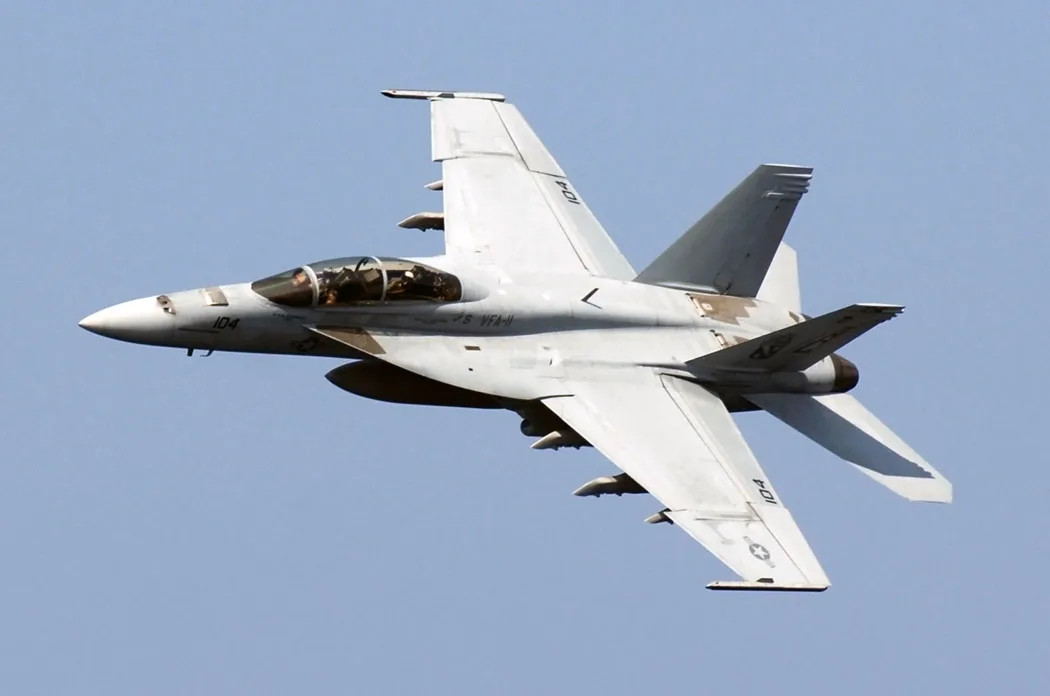
The Hornet was designed to do two jobs from one airframe — fighter and attack aircraft — hence the "F/A" designation. The pilot can switch between air-to-air and ground-attack modes at the press of a button.
The improved single-seat F/A-18C and two-seat F/A-18D arrived in 1987 with better avionics and weapons. Hornets have flown from US carriers and with Canada, Australia, Spain, Finland, Switzerland, Kuwait and Malaysia. The larger Super Hornet is a separate, newer aircraft. Units built covers all Hornet versions.
Specifications
Dimensions
| Length | 17.10 m |
|---|---|
| Wingspan | 12.30 m |
| Height | 4.70 m |
| Wing area | 37.2 m² |
Weights & fuel
| Empty weight | 10,400 kg |
|---|---|
| Max. take-off weight | 23,400 kg |
Performance
| Max. speed | 1,915 km/h |
|---|---|
| Max. Mach | Mach 1.80 |
| Ferry range | 3,330 km |
| Combat radius | 740 km |
| Service ceiling | 15,240 m |
| Rate of climb | 254.0 m/s |
Crew & capacity
| Crew | 1–2 |
|---|---|
| Hardpoints | 9 |
Powerplant
| Engines | 2 |
|---|---|
| Engine model | GE F404-GE-402 |
| Thrust (each) | 48.9 kN |
| Thrust with afterburner (each) | 79.2 kN |
Figures are compiled from public sources and may be approximate; they can vary by variant and configuration.
Armament
- 20 mm M61A1 Vulcan rotary cannon
- About 6,200 kg of missiles and bombs on 9 hardpoints, including AIM-120, AIM-9, Harpoon and guided bombs
Photos
No photos yet