Overview
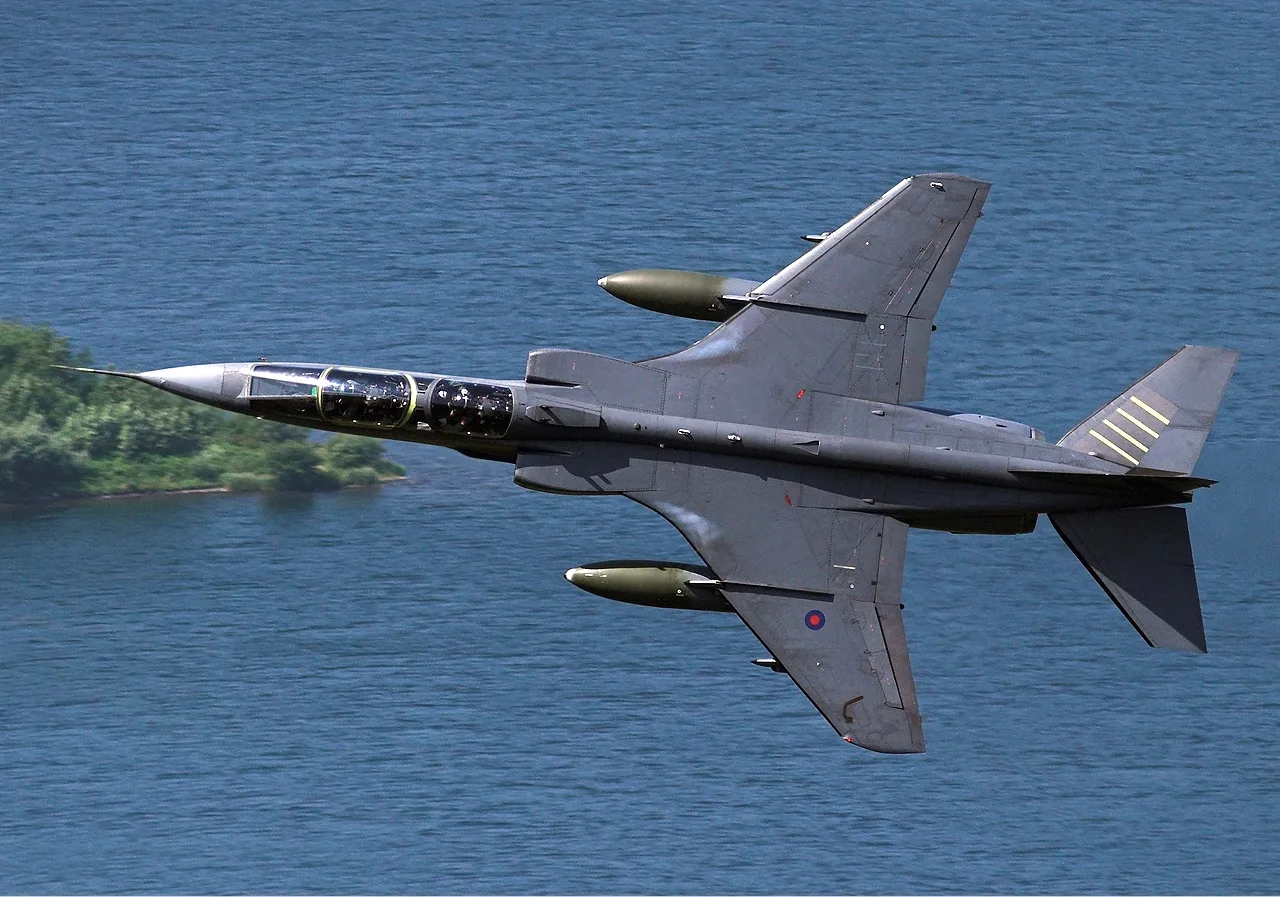
The SEPECAT Jaguar began as an Anglo-French project for a supersonic trainer, but grew into a tough, low-flying strike aircraft. It can operate from rough airstrips and even motorways, which suited Cold War plans to spread aircraft away from vulnerable bases.
France retired its Jaguars in 2005 and Britain in 2007, but India built more than 100 under licence at HAL as the "Shamsher" and still flies several squadrons. Indian Jaguars are unusual in carrying missiles on rails mounted above the wings.
Specifications
Dimensions
| Length | 16.83 m |
|---|---|
| Wingspan | 8.69 m |
| Height | 4.89 m |
| Wing area | 24.2 m² |
Weights & fuel
| Empty weight | 7,000 kg |
|---|---|
| Max. take-off weight | 15,700 kg |
Performance
| Max. speed | 1,699 km/h |
|---|---|
| Max. Mach | Mach 1.60 |
| Ferry range | 3,524 km |
| Combat radius | 908 km |
| Service ceiling | 14,000 m |
Crew & capacity
| Crew | 1–2 |
|---|---|
| Hardpoints | 5 |
Powerplant
| Engines | 2 |
|---|---|
| Engine model | Rolls-Royce/Turbomeca Adour Mk 102 |
| Thrust (each) | 22.8 kN |
| Thrust with afterburner (each) | 32.5 kN |
Figures are compiled from public sources and may be approximate; they can vary by variant and configuration.
Armament
- 2 × 30 mm ADEN or DEFA cannons
- About 4,500 kg of bombs, rockets and missiles on 5 hardpoints (plus overwing missile rails)
Photos
Photo 1: Chris Lofting / Wikimedia Commons · GFDL 1.2
Some text and images come from Wikipedia / Wikimedia Commons under CC BY-SA licences.